↓
 

Hearth Moon Rising's Blog

A resource for worshipers of the Goddess

Hearth Moon Rising's Blog

Post navigation

<< 1 2 3 4 5 6 7 8 … 32 33 >>

Elen of the Ways

Hearth Moon Rising's Blog Posted on September 23, 2016 by Hearth Moon RisingSeptember 23, 2016
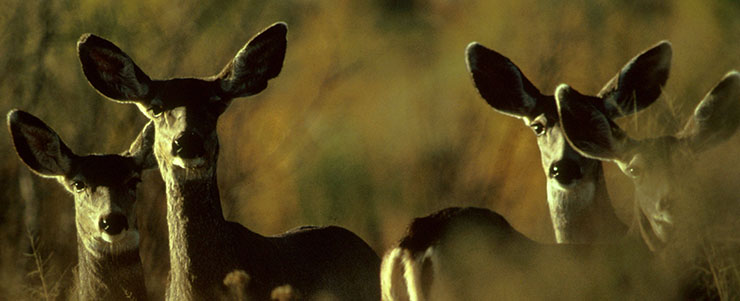
Photo: USFWS.

Photo: USFWS.

Again from my forthcoming book on animal divination:

An increasingly popular conception of the Deer Goddess goes by the name of Elen or Elen of the Ways. Knowledge about this goddess was disseminated through the research of Caroline Wise(1) on Elen of the Hosts, who appears in a short section of the Welsh Mabinogion. While researching ley lines in Britain, Wise discovered this passage:

…Elen thought to make high roads from one stronghold to another across the Island of Britain. And the roads were made. And for that reason they are called the Roads of Elen of the Hosts, because she was sprung from the Island of Britain, and the men of the Island of Britain would not have made those great hostings for any save for her.(2)

The “hosts” refers to the army that utilized Elen’s roads. Elen of the Hosts is a historical figure, the queen of a usurper in the Gaulish Empire who assassinated the Emperor Gracian. Also known as Saint Helen (and not to be confused with the Saint Helen who is mother of the Emperor Constantine), she is reputed to have established Christianity in Wales. Wise theorized that the roads of Saint Helen were created by migrating reindeer, and that the Elen of the Hosts described in the Mabinogion is conflated with an older deer goddess. The most convincing part of her argument, from a scholarly point of view, is the prevalence of deer words sounding like Elen in many European languages. My Google translator confirms that “eilit” is Irish Gaelic for “doe,” while “jelen” is Polish for “deer” and “elen” is Bulgarian for “deer.” “Elain” is Finnish for “animal.” The Dictionary of Word Origins has this to say about the English word “elk”:

The Indo-European base *ol-, *el- produced a number of words for deer-like animals – Greek elaphos ‘stag,’ for example and Welsh elain ‘hind,’ not to mention English eland.(3)

“Elen” may be a root Indo-European word for “deer,” and if so would be an appropriate appellation for the Deer Goddess. If the roads of Elen were established by reindeer, however, it is doubtful that a reindeer goddess was worshiped on the British Isles at that earlier time by that name, since the large scale Indo-European migrations, unlike those of the reindeer, were fairly recent.

The most compelling case for Elen as a deer deity is the number of people who attest to connecting strongly with a deer goddess by this name. Chesca Potter seems to be the first modern artist to channel Elen as Reindeer Woman in the 1980s, but Elen is probably now the most commonly depicted Horned Goddess.

(1) Caroline Wise, “Elen of the Ways,” andrewcollins.com, http://www.andrewcollins.com/page/articles/elen_1.htm accessed July 9, 2016.

(2)The Mabinogion, translated by Gwen Jones and Thomas Jones, (New York: Alfred A. Knopf, 2001), 77.

(3) John Ayto, Dictionary of Word Origins, (New York: Arcade), 197.


Further Reading

Wise, Caroline. Finding Elen: The Quest for Elen of the Ways. London: Eala Press, 2015.

Sentier, Elen. Elen of the Ways: Following the Deer Trods Hants, UK: Moon Books, 2013.
Posted in Animals | Tagged deer, Elen, Elen of the Ways, reindeer

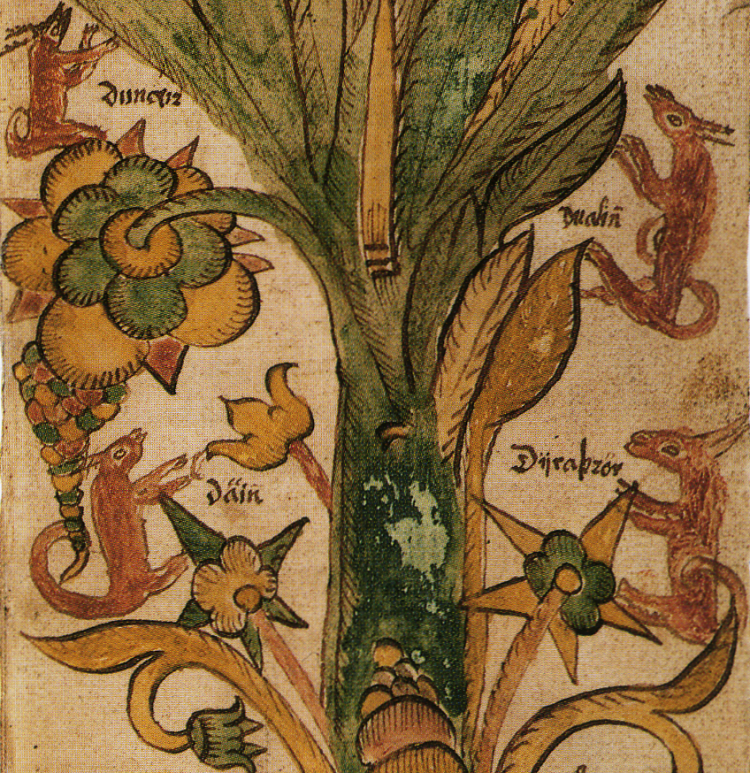
Reindeer and the World Tree

Hearth Moon Rising's Blog Posted on September 16, 2016 by Hearth Moon RisingSeptember 16, 2016
Deer much at the foliage on Yggdrasil. Iceland, 17th century.

Deer much at the foliage on Yggdrasil. Iceland, 17th century.


More from my forthcoming book on animal divination:

The stag of Artemis being in fact a reindeer raises questions about the four stags who nibble on the branches of the Germanic world tree, Yggdrasil. This is the tree that holds the nine worlds, three each in the lower, middle, and upper regions. A snake nibbles at the roots of the tree, an eagle claims the high branches, and four deer browse the foliage. These animals create balance by tempering the growth of the ever-growing tree. The deer are identified as stags in the only source that mentions them, the Prose Edda, so this is not a case of a picture being misinterpreted, at least not in modern times. It is curious that reindeer would not be prominent in the mythology of the Norse, when reindeer memory survives as far south as Greece. Another stag, called Eikthyrnyr, lives atop a tree called Laerad in Odin’s upper realm of Valhalla. Eikthyrnyr munches the leaves of Laerad along with a nanny goat named Heidrun. From the udders of Heidrun flow mead. From the antlers of Eikthyrnyr flow the waters that make up the rivers of the worlds. Eikthyrnyr could also be a reindeer doe. Default male bias being the pervasive affliction that it is, assertions of maleness in animal deities must be entertained with skepticism. The presence of so-called stags where we would expect to find reindeer, amid the absence of mention of any does, suggests either naiveté or a patriarchal rewriting of mythology.

Posted in Animals, Germanic | Tagged deer, Yggdrasil

Artemis and the Reindeer Doe

Hearth Moon Rising's Blog Posted on September 9, 2016 by Hearth Moon RisingSeptember 9, 2016
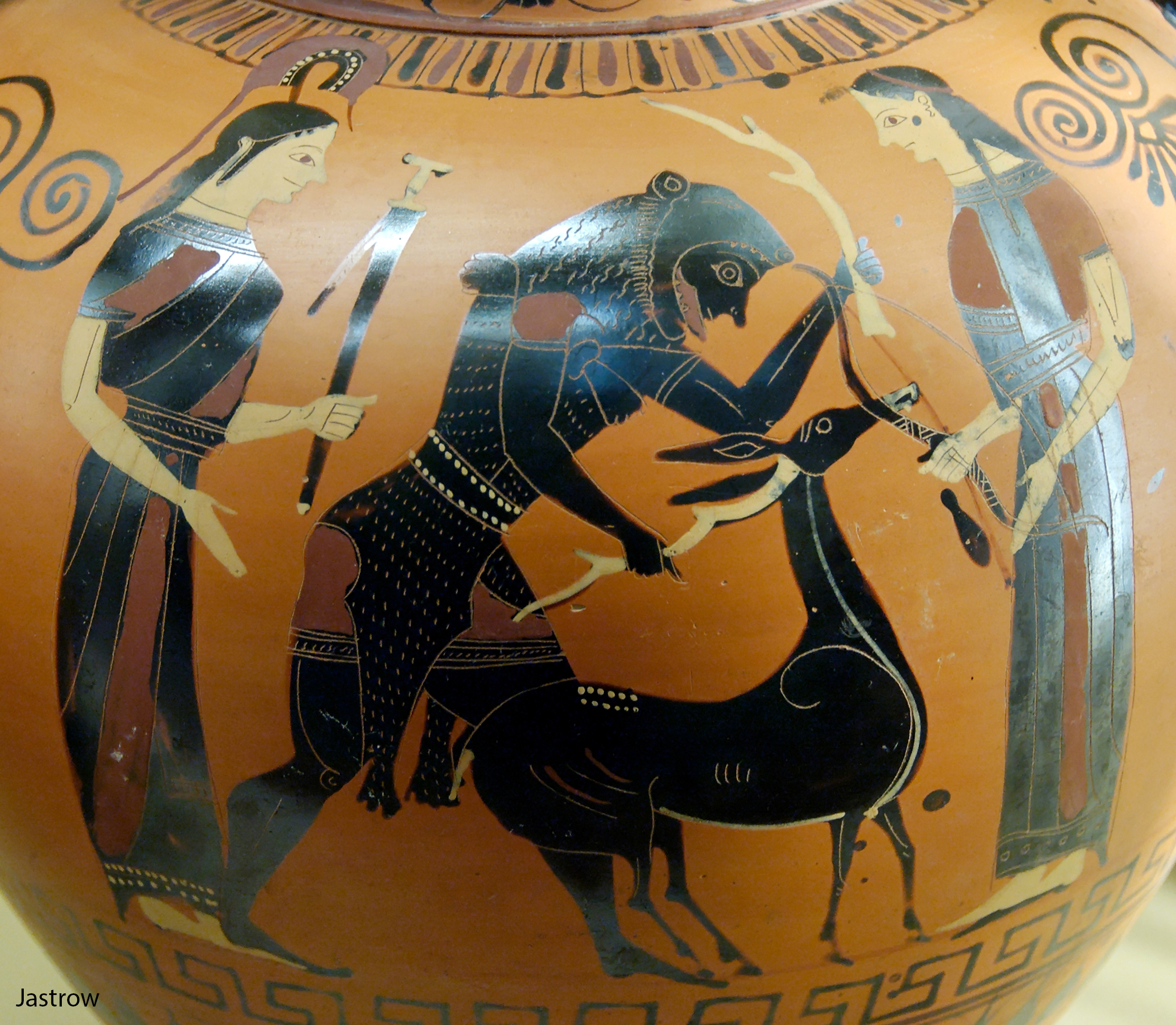
Herakles capturing the Ceryneian Hind as Artemis and Athena look on. Photo: Marie-Lan Nguyen/Wikimedia Commons.

Heracles capturing the Ceryneian Hind as Artemis and Athena look on. Photo: Marie-Lan Nguyen/Wikimedia Commons.


Here is another short excerpt from my forthcoming book about animal divination:

In antiquity the deer familiar of Artemis was a reindeer, which some confuse with a stag. Both horned and hornless does are depicted driving the goddess’s chariot. These does are magical and can run faster than an arrow. A fifth doe, called the Ceryneian Hind, was too fast even for Artemis to catch, but the doe was later given to her by one of the Pleiades sisters, Taygete. The third labor of Heracles (Hercules) involves capturing the Ceryneian Hind and bringing her alive to Mycenae, a city in the Argolis region of the Peloponnese. This quest, which takes exactly one year, begins at the temple of Artemis in Oenoe (the Oenoe located in Argolis). Though the journey begins and ends in about the same place, Heracles chases the Hind through the upper Balkan region and into Hyperborea, a vaguely defined place in the north. The indomitable Hind then leads Heracles south to the temple of Artemis atop Mount Artemisium, where she allows herself to be captured. This is a shaman’s journey, an initiation into the cult of Artemis. The giant Hind, with her gold antlers and brass hooves, may have been a statue in the temple with those features.

Posted in Animals | Tagged Artemis, deer, Herakles

The Deer Shifters: Another deer article from the past

Hearth Moon Rising's Blog Posted on September 2, 2016 by Hearth Moon RisingSeptember 2, 2016

deerlarge

Several years ago a North Country man shot and killed a member of his hunting party, the girlfriend of his son. This is an all too frequent tragedy, not worth a mention anywhere but the local news. The man said he thought the girlfriend was a deer, which is also not so unusual. More perplexing is that the woman was standing not far away from the shooter and was immobile, leaning against a tree. Regardless, the victim’s family and the prosecutor believed this was an accident, and the shooter was offered a reduced prison sentence that left some observers looking askance. Was it plausible that a sober man with good eyesight could accidentally shoot a person at close range, no matter how crazed he was to “get his buck”?

Or, could the victim-hunter – thinking about the deer, struggling to perceive the deer, trying to get in the mind of the deer, willing the deer to come closer – actually have turned into a deer? This alternative may seem more fantastic than the first, yet I have seen women (always women for some reason) momentarily turn into deer.

Moreover, I once received validation of sorts for my perception, during a women’s ritual. I glanced over to the woman beside me and saw that she had turned into a deer, and I thought I must be mistaken. This woman was very infatuated with bears, and I would never have associated her with deer. She was not fazed by this, however, explaining that her Cherokee great-grandmother had believed her to be attuned with the deer and had lobbied unsuccessfully to give her a deer name.

In the story of Sadb and Oisin the Irish heroine Sadb is turned into a fawn by one of her father’s enemies. She evidently retains the power to change back and forth, because she becomes the lover of the hero Fionn Mac Cumhaill after he spares her cervid form during a hunting expedition. The enraged druid changes her back into a doe, this time permanently, and in this form she gives birth to their son Oisin. The child appears human in all ways, save for a fawnlike forelock of hair, yet he can run as fast as a deer. (A slightly different version of this story appears in my book Invoking Animal Magic.)

The Scottish hag Beinne Bhric changes into a gray deer, echoing legends of the Cailleach Bheur, the giant crone who keeps a herd of magic deer. The generic Scottish word for a shape-shifting charm, fith-fath (fee faw), literally means to take the shape of a deer.

Make no mistake: women can take the shape of deer, at least some women can. It is the stuff of legend, but nonetheless true. Serious inquiry has not been made into the qualities of the children of doe-mothers, but perhaps this is how shape-shifting ability is passed on. If you think you might be part deer, make your way carefully in the woods.


Sources:

Celtic Mythology. New Lanark, Scotland: Geddes and Grosset, 1999.

Matthews, Caitlin and John. The Encyclopedia of Celtic Wisdom: The Celtic Shaman’s Sourcebook. Shaftsbury, UK: Element Books, 1994.

Monaghan, Patricia. The Encyclopedia of Celtic Mythology and Folklore. New York: Checkmark Books, 2008.

Posted in Animals | Tagged deer

Deer Photos on Tumblr

Hearth Moon Rising's Blog Posted on August 26, 2016 by Hearth Moon RisingAugust 26, 2016
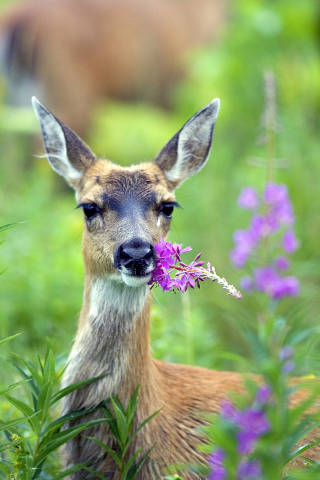
Sitka Blacktailed Deer in Kodiak National Forest. Photo: Steve Hillbrand/US Fish and Wildlife Service.

Sitka Blacktailed Deer in Kodiak National Forest. Photo: Steve Hillbrand/USFWS.

I have sixteen cool pictures of deer (reblogged) on my Tumblr site.

Posted in Animals | Tagged deer

Call of the Deer

Hearth Moon Rising's Blog Posted on August 19, 2016 by Hearth Moon RisingAugust 19, 2016
Bugling elk. Photo: US Forest Service.

Bugling elk. Photo: US Forest Service.

The deer family is composed of deer, caribou, elk, and moose. Con Slobodchikoff, in Chasing Doctor Doolittle, describes communication within the deer family (and many other species). He says regarding elk:

The bugling starts off as a long, eerie low-frquency screeching sound, followed by a series of three or four shorter sounds kind of like someone scratching glass on concrete. The first time one of my graduate students, newly arrived from the East Coast, heard this sound on a dark evening in the mountains he was startled and disoriented.… I told him he had heard the aggressive call of a male elk (Cervus canadensis), advertising his presence to other males and perhaps also to any females that happened to be nearby. When you hear it for the first time, it can be pretty terrifying.

Here is a male elk bugling:


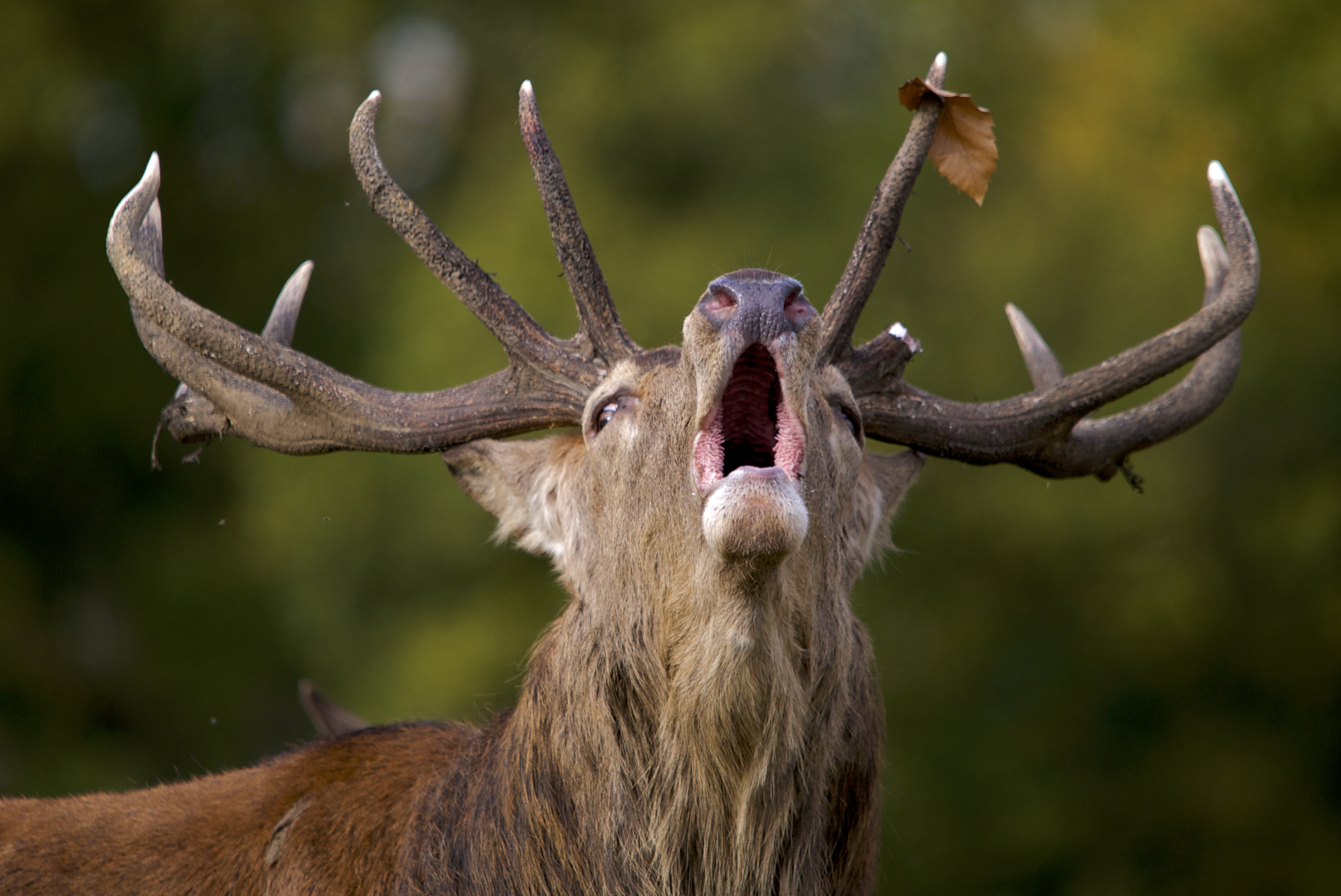
Red Deer (Cervus elaphus) Close portrait with frontal view of stag roaring during the rut, with mouth open. England. Photo: Arturo de Frias Marques.

Red Deer (Cervus elaphus), England. Photo: Arturo de Frias Marques.

Dr. Slobodchikoff goes on to discuss the call of the Red Deer stag:

Although red deer (Cervus elaphus) are similar in size and shape to elk, and in fact were thought for a long time to be the same species of animal, their calls are very different. Red deer are found in Europe, Western Asia, and Northern Africa. They have a roaring call that advertises their aggressiveness toward other males, and they make this call during the mating season when they are guarding a harem of females. Depending on the size of their opponents, the males can vary the base pitch of their roars, making the roars sound deeper when they are faced with a larger opponent. This gradation in the base pitch of the roars probably conveys information to challengers about the males’ willingness and ability to fight to defend her harem.


Source:
Con Slobodchikoff, Chasing Doctor Doolittle: Learning the Language of Animals (New York: St. Martin’s Press, 2012) 185-186.

Posted in Animals | Tagged Con Slobodchikoff, deer, elk, red deer

Diana and the Deer

Hearth Moon Rising's Blog Posted on August 12, 2016 by Hearth Moon RisingAugust 12, 2016
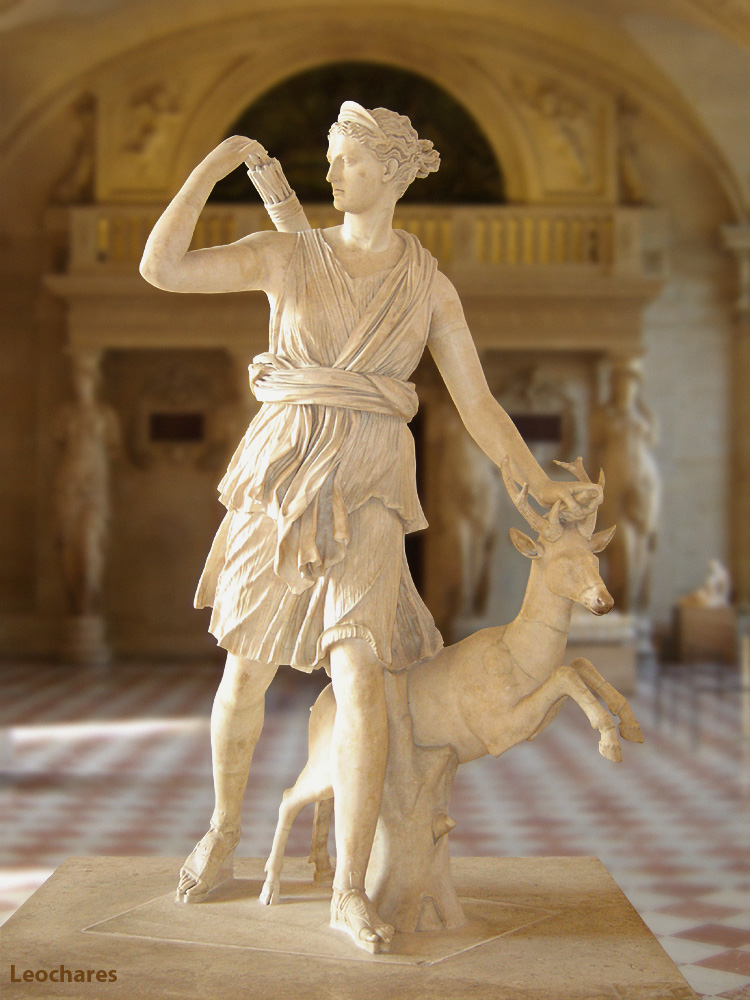
Diana. Photo: Leochares.

Diana. Photo: Leochares.

August 13 marks the start of an ancient Roman festival to Diana. Torches were carried in processions in honor of the goddess with the aim of averting storms which might imperil the ripening harvest. The torch is one of Diana’s symbols, as she is the goddess who governs light.

Thinking of Diana as goddess of light fits with another of her symbols, the deer. In earlier posts I wrote about how deer migrations are so closely aligned with solar rhythms that in many cultures deer goddesses are also sun goddesses. Many other animals have rhythms ruled by the sun that are noticeable to us, of course, but deer were once a staple in the human diet.

Posted in Animals | Tagged deer, Diana, sun, torch

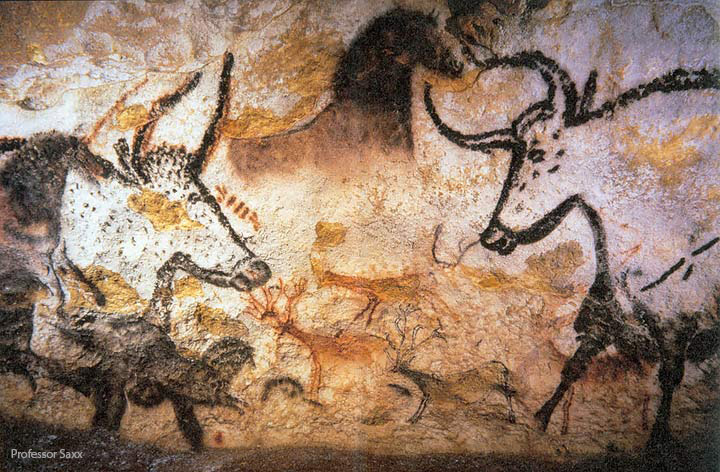
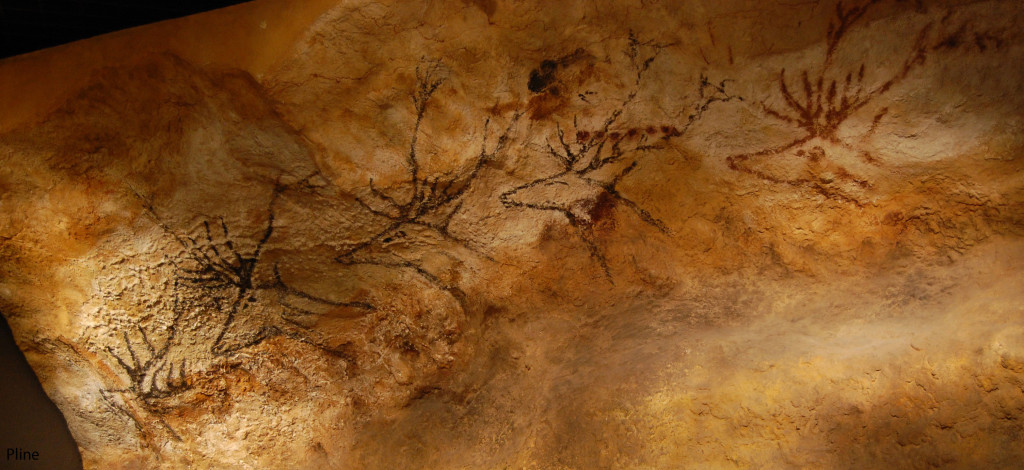
Cave Art of Deer

Hearth Moon Rising's Blog Posted on August 5, 2016 by Hearth Moon RisingAugust 5, 2016

The following was posted about a year and half ago. I am re-posting it now because it fits with the deer theme I’ve been focusing on this summer.

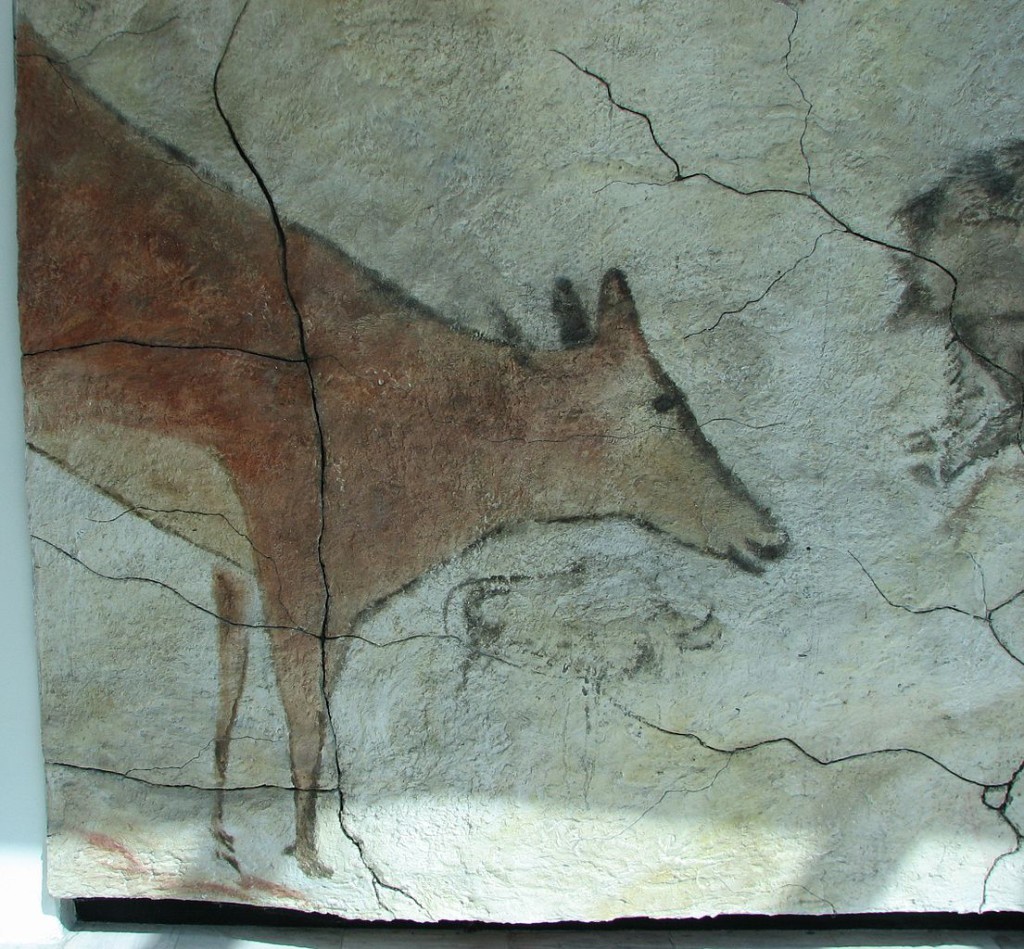
Doe on ceiling at Altamira Cave, Spain. 16,000 bce.

Doe on ceiling at Altamira Cave, Spain. 16,000 bce.


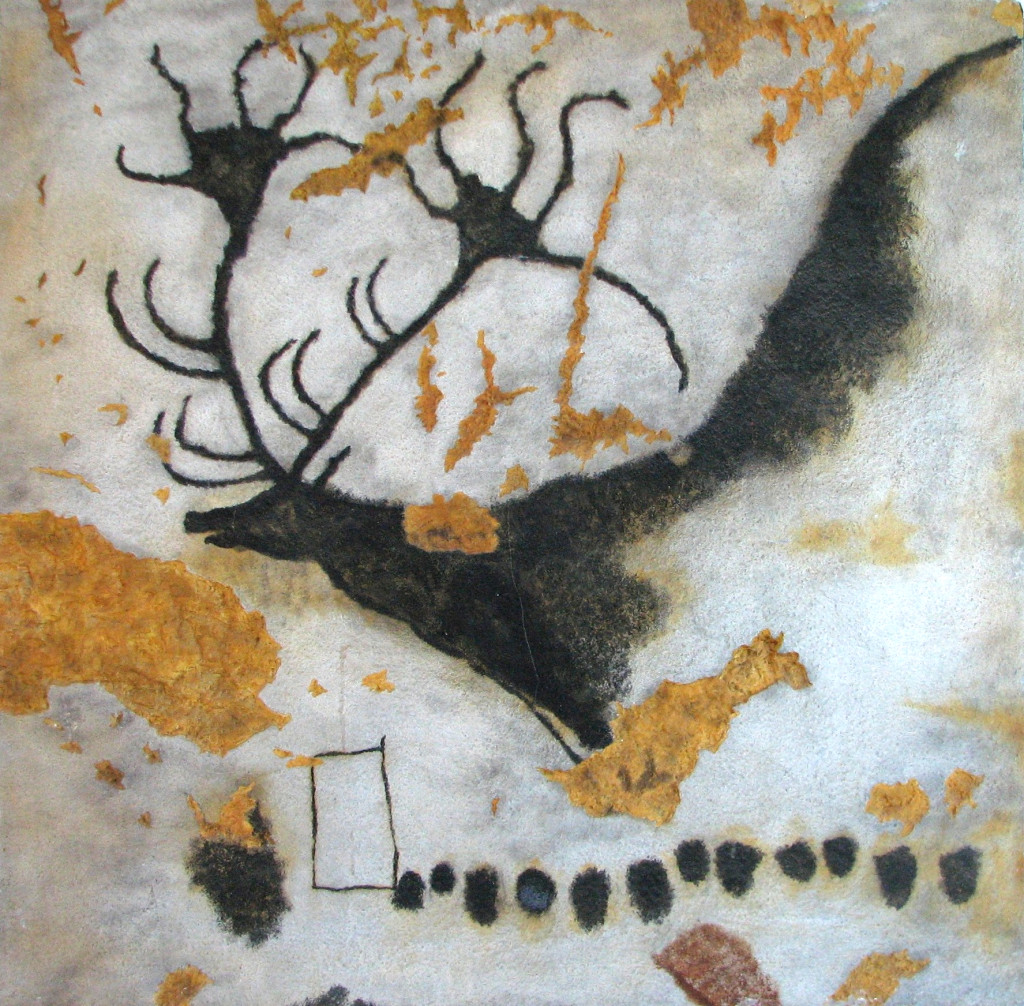
Megaloceros. Lacaux Cave, France. 17,000 bce.

Megaloceros. Lacaux Cave, France. 17,000 bce.


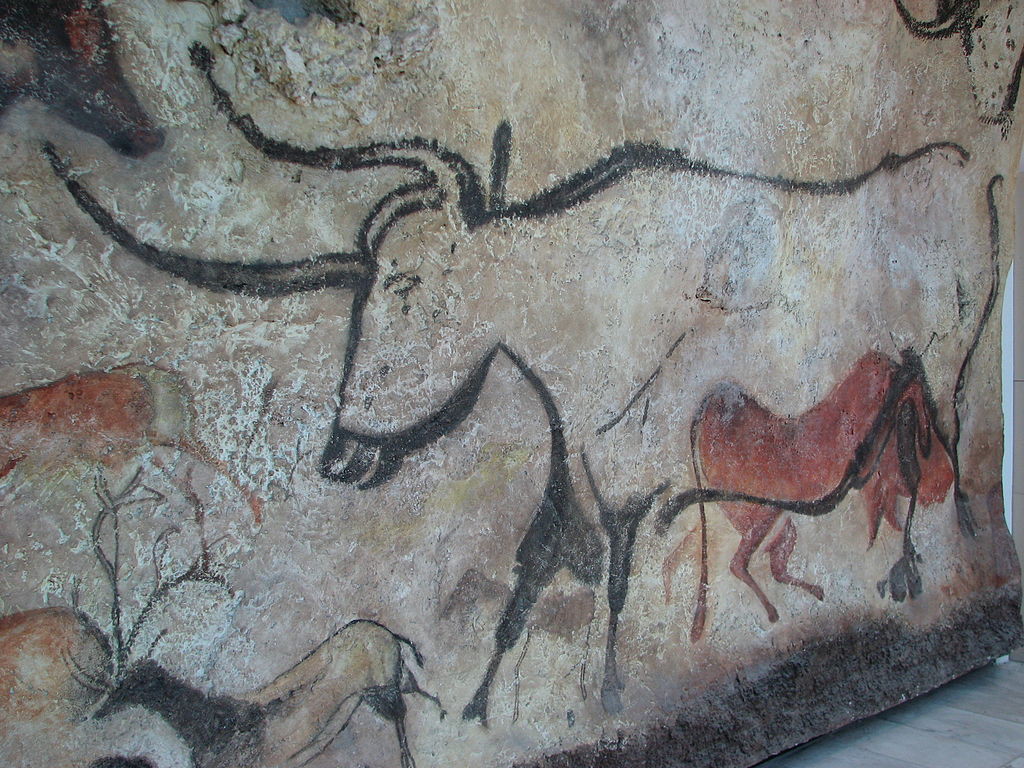
Lascaux Cave (replica)

Lascaux Cave (replica)


Altxerri Cave, Spain. 36,000 bce. Head of reindeer with fox head inside. Photo Gipuzkoa Kultura.

Altxerri Cave, Spain. 36,000 bce. Head of reindeer with fox inside. Photo Gipuzkoa Kultura.

Lascaux. Photo Professor Saxx.

Lascaux. Photo Professor Saxx.


Lascaux. Photo Pline.

Lascaux. Photo Pline.

Posted in Uncategorized

A Momentous Occasion

Hearth Moon Rising's Blog Posted on July 29, 2016 by Hearth Moon RisingJuly 29, 2016

Finally. How can the week go by without a feminist American blog commenting on this? But really, what more is there to say?

Every time I started to get enraged by all the misogyny from the Left and the media that has characterized this primary, I had to take a breath and remind myself “Hillary is winning.” When I got too disgusted by all the lies and double standards I even sent her a few bucks. And now, she has earned the nomination.

I won’t say she was given the nomination, because women in this country have never been given political power – we have fought for it. But this is not just about politics. Though the hug between President Obama and Hillary Clinton gladdened my heart, I have not always agreed with Barack Obama. Sometimes I liked what he was doing and other times I was critical. Clinton is still a nominee for president, not the one filling that office, and she has had no chance, yet, to earn my displeasure. I am sure there will be times when I happy with her and times when I am in disagreement. But I will always be proud of her and of all the women and men who voted for her. It’s about time.


Posted in Feminism | Tagged Hillary Clinton

Really Big Deer

Hearth Moon Rising's Blog Posted on July 22, 2016 by Hearth Moon RisingJuly 22, 2016
Irish Elk from Lascaux cave painting.

Irish Elk from Lascaux cave painting.

The Scottish goddess Cailleach Bheur roams the hillsides herding giant deer and drinking their milk. Cailleach, under various spellings, has been characterized as a deer, hare, cat, grain, serpent, gray mare, mountain, stone, and hag goddess, or as a hag goddess alternating with a maiden alter-ego. The pervasive characteristics of this deity are: female, old, and very large (even giant). I believe Cailleach is a word for a pre-Celtic concept of ancestress, and hence we should expect to find many Cailleachs. The deer Cailleach may be a reindeer, since milk and herding are part of her lore. Reindeer were indigenous to northern Scotland up to the thirteenth century. Alternatively, the deer Cailleach may be Red Deer, who also live in groups and are larger than other European deer species. Another possibility is that the deer Cailleach could be an Irish Elk, a huge species of deer (not elk) that inhabited much of western Eurasia through the Ice Age. It is speculated that the changing climate could not support the Irish Elk, but the species was able to survive in isolated pockets throughout the Neolithic, documented in the foothills of the Ural Mountains even in historical times. The male Irish Elk had beautiful, formidable antlers.

The Scottish word for shape shifting, fith-fath, literally means to take the shape of a deer. It is easy to see why deer, having such a fey quality, would be equated with this concept. Deer are crepuscular creatures, active in the gray periods of the day, and seem to appear and disappear at will. I once stood next to a doe in an open forest and did not see her, so invisible did she make herself. It was almost like she transformed herself into a tree. I have also heard anecdotes about women changing themselves into deer – always women for some reason – and I have even witnessed this phenomenon myself.

Posted in Animals | Tagged cailleach, deer, lascaux, megaloceros

Post navigation

<< 1 2 3 4 5 6 7 8 … 32 33 >>

Recent Posts

  • Divining with Animal Guides available for pre-order
  • New Web Page is Up!
  • Another Personal Update
  • Lost Lookout
  • Witches and Pagans: Women in European Folk Religion, 700-1100 (Review)

Archives

  • November 2017
  • June 2017
  • May 2017
  • April 2017
  • March 2017
  • February 2017
  • January 2017
  • December 2016
  • November 2016
  • October 2016
  • September 2016
  • August 2016
  • July 2016
  • June 2016
  • May 2016
  • April 2016
  • March 2016
  • February 2016
  • January 2016
  • December 2015
  • November 2015
  • October 2015
  • September 2015
  • August 2015
  • July 2015
  • June 2015
  • May 2015
  • April 2015
  • March 2015
  • February 2015
  • January 2015
  • December 2014
  • November 2014
  • October 2014
  • September 2014
  • August 2014
  • July 2014
  • June 2014
  • May 2014
  • April 2014
  • March 2014
  • February 2014
  • January 2014
  • December 2013
  • November 2013
  • October 2013
  • September 2013
  • August 2013
  • July 2013
  • June 2013
  • May 2013
  • April 2013
  • March 2013
  • February 2013
  • January 2013
  • December 2012
  • November 2012
  • October 2012
  • September 2012
  • August 2012
  • July 2012
  • June 2012
  • May 2012
  • April 2012
  • March 2012
  • February 2012
  • January 2012

Categories

  • Adirondacks
  • Animals
  • Astrology
  • Buddhism
  • Celtic
  • Egypt
  • Eostre
  • Feminism
  • Germanic
  • Greek
  • Hearth's Books
  • Imbolc
  • Magical Tools
  • Mesopotamia
  • Midsummer
  • Moon
  • Native American
  • Plants
  • Reviews
  • Samhain
  • Stones
  • Tarot
  • Trees
  • Uncategorized
  • weather
  • Yule
© 2012-2017 Hearth Moon Rising
↑