
Photo by 4028mdk09.

Photo by 4028mdk09.
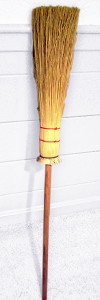 To finish up the broom series, I will share some tidbits about consecrating the magical broom (also called a besom). There is no consensus about how this should be done, but many witches believe consecration is important. Carrie Moonstone says in her Witchvox article How to Make a Besom, “Once you have finished the besom, it needs to blessed and consecrated as you would with any other magickal tool. You may dedicate it to a spirit or deity of your choice and charge it with protective energies.” As Moonstone implies, the broom is not unique in this; most magical tools are consecrated in some way.In Wheel of the Year: Living the Magical Life, Pauline Campanelli says you must first “name your broom as you would a horse.” She tells you to “anoint it with oil as you would a candle, and consecrate it in the names of the Gods:
Besom of Birch with Willow tiedBe my companion and my guide.On ashen shaft by moonlight paleMy spirit rides the windy galeTo realms beyond both space and timeTo magical lands my soul will sailIn the company of the Crone all rideThis Besom of birch with willow tiedSo do I consecrate this magical TreeAs I will, so must it be!
Tess Whitehurst gives a detailed ritual for full moon consecration of a new broom (which is too long to quote here) in her book Magical Housekeeping: Simple Charms and Practical Tips for Creating a Harmonious Home. She uses frankincense, candle flame, salt and rosewater to consecrate the broom to all four elements. Christine Zimmerman gives a four-elements consecration here. Yvonne at Earth Witchery does not believe there is anything unique about the broom in this regard and advises to “Consecrate the finished broom as you would any ritual object.”Radomir Ristic in Balkan Traditional Witchcraft maintains that “The broom itself has magical power and it does not require consecration.” I myself lean toward this point of view.SourcesCampanelli, Pauline. The Wheel of the Year: Living the Magical Life. St. Paul, MN: Llewellyn, 1989.Moonstone, Carrie. “How to Make a Besom.” At Witchvox.Ristic, Radomir. Balkan Traditional Witchcraft. Michael C. Carter, Jr., trans. Los Angeles: Pendraig, 2009.Whitehurst, Tess. Magical housekeeping: Simple Charms and Practical Tips for Creating A Harmonious Home. St. Paul, MN: Llewellyn, 2010.Zimmerman, Christine. A Pray or Ritual for a Broom Cleansing.In honor of the last article in the witch broom series, apropos of nothing, I leave you with my favorite magic broom video.
 A little update on my post about the Buckeye Tree, where I made the assertion that school spirit at The Ohio State University is legendary and the enthusiasm for the Bucks has to be seen to be believed. I now offer exhibits A-Z: Ohio State fans, in defense of their team which was banned by the NCAA from bowl game participation this year for financial rule-breaking of coaches and players, actually petitioned Barack Obama for a presidential pardon. “Please exercise your executive power to pardon the NCAA’s excessive sanctions placed on The Ohio State Buckeyes to enable a rightful, satisfying culmination to the college football season for the American people.” Needless to say, this went nowhere. Maybe with all the attention from the past presidential race, Ohio has gotten a bit delusional about the importance of its place in the world. Or maybe faith in the lucky mojo of the Buckeye just won’t quit.
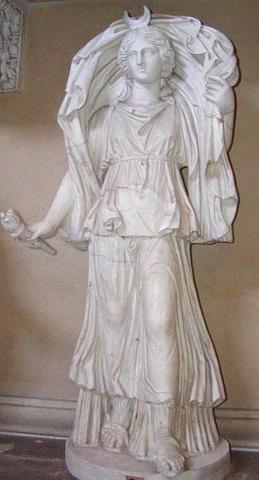
Artemis

Photo Nino Barbieri.
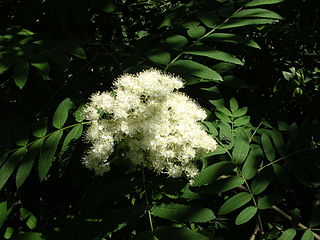 I was feeling rather smug about my identification of a new magical tree, when I learned that the American Mountain Ash is a New World subspecies of the rowan tree. Oh well.Every beginning magic student hears about the rowan tree. The tree with magic berries, protected by a dragon. The source of the best wands. The tree of strong protection, which banishes lightening. The tree of vision. Both saints and heroes had some of their most extraordinary revelations under the rowan tree. “What’s a rowan tree?” I recall asking on more than one occasion. The response would be, “Oh, it’s some tree that grows in England, and it [recites a litany of magical qualities].” Why didn’t anyone tell me that the rowan is the Mountain Ash? Because they didn’t know. Because most of us learn about witchcraft in urban settings. Because I was studying in California, and the Mountain Ash doesn’t grow there any more than the rowan does. Because the study of magic has gotten lost in its abstractions. This is one of the reasons I started the Yellow Birch School of Magic, because I wanted to connect pagans with the tangible foundations of magical practice.The rowan is the tree for the second month of the Celtic tree calendar. Says Robert Graves, “The important Celtic feast of Candlemas fell in the middle of it (February 2). It was held to mark the quickening of the year…” Quickening refers to the point in the pregnancy where fetal movements can be felt by the mother. In folklore it is believed to be the time when the spirit incarnates in the growing fetus. Graves goes on to say “Since it was the tree of quickening, it could also be used in a contrary sense. In Danaan Ireland a rowan-stake hammered through a corpse immobilized its ghost; and in the Cuchulain saga three hags spitted a dog, Cuchulain’s sacred animal, on rowan twigs to procure his death.”By identifying the rowan tree with Candlemass, I have given away the link between this tree and the Celtic goddess Brigid. February 2nd is also known as “Brigid’s Day.” Brigid is the Celtic fire goddess. Patricia Monaghan says of her pre-Christian worship, “She may have been seen as a bringer of civilization, rather like other Indo-European hearth goddesses (Vesta, Hestia) who ruled the social contract from their position in the heart and hearth of each home.” Fire is associated with vision, and Brigid’s Day is a day for divination, particularly weather divination. This is why the groundhog sees or doesn’t see his shadow on this day. And how is the rowan tree connected with fire? For that we have to go back to those little orange berries, the color of a warm fire.SourcesGraves, Robert. The White Goddess. New York: Farrar, Straus and Giroux, 1966.Ketchledge, E.H. Forests and Tress of the Adirondack High Peaks Region. Lake George, NY: Adirondack Mountain Club, 1967.Monaghan, Patricia. The Encyclopedia of Celtic Mythology and Folklore. New York: Checkmark Books, 2008.Ristic, Radomir. Balkan Traditional Witchcraft. Trans. Michael C. Carter, Jr. Sunland, CA: Pendraig, 2009.Tree Encyclopedia. American Mountain Ash – Sorbus americana
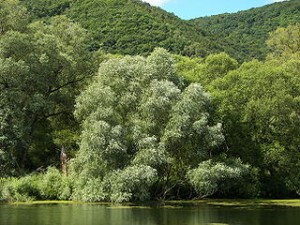
White willow. Photo by Willow.

Willow catkin
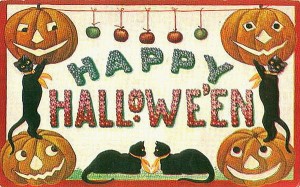 Our most sacred holiday of the year, communicating with ancestors, acknowledging our many gifts, recognizing other worlds. Truly we are blessed.
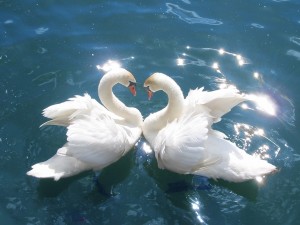
European goddesses often have both an animal and a bird form. Can you guess why Aine’s bird form would be a swan?
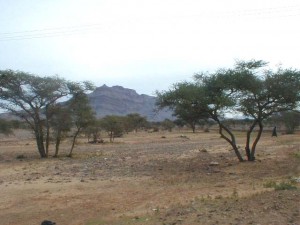
Acacia trees in Morocco. Photo L. Mahin.
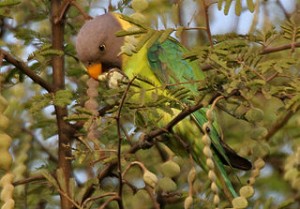
Parakeet feeding on acacia pod. Hyderbad, India. Photo J.M. Garg.
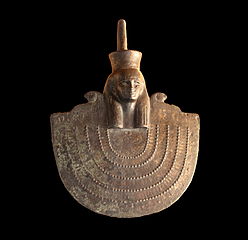
Aegis of Neith. 600 BCE. Photo Rama.
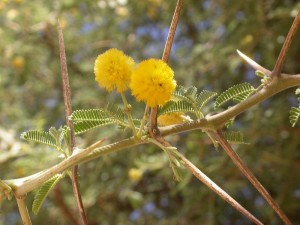
Acacia flowers. Photo Phillipe Birnbaum.
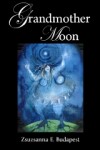 Grandmother Moon recently became available again through Amazon Createspace. The book is a collection of goddess lore based on the lunar calendar, a wheel corresponding to the zodiac sign for each lunation. There are thirteen sections or “lunations,” each starting with basic information about the moon followed by a contemplation about a goddess associated with this moon energy. There is information about the emotional side of the moon, auspicious activities, a few spells, and descriptions of lunar holidays. The lunar holidays are usually not European but Middle Eastern, Chinese, East Indian, Native American or Mesoamerican. Z explains, “This was my intention because these cultures have preserved their lunar calendars to this day.”Looking at the section for the upcoming new moon in Libra, October 13–15, Grandmother Moon categorizes it as the “Blood Moon.” Its herb is oatstraw and its animal is the cat. The goddess is the Egyptian overseer of truth and justice, Maat — not surprising since the symbol for Libra is the scale. This is a good time to fall in love and to decorate the home, and the energies of pleasure dominate. In keeping with this, Z offers a spell for physical pleasure. The festivals for this moon highlight the difficulties of incorporating an array of lunar calendars in a solar framework. The Jewish festival of Rosh Hashanah occurred at the last new moon and the Hindu festival of Diwali will occur next month. The full moon festivals occurred the end of September. We’ll have to look ahead to the Mourning Moon on October 29th and the festival of Oschophoria, when the full moon in Taurus will celebrate the ecstatic Greek God of the grapes, Dionysus. Sounds like a wonderful time for a party.Grandmother Moon is easy to pick up and put away, skim through and read out of order. It seems tailor-made for busy schedules and short attention spans. It has an index, which is helpful. The rituals, which appropriately focus on the emotions, can be done solo. It’s a great book for developing an understanding of moon energies.